 Bite by Place
Polish bread · Kraków
The Bagel: Kraków's Boiled Bread That Became New York's
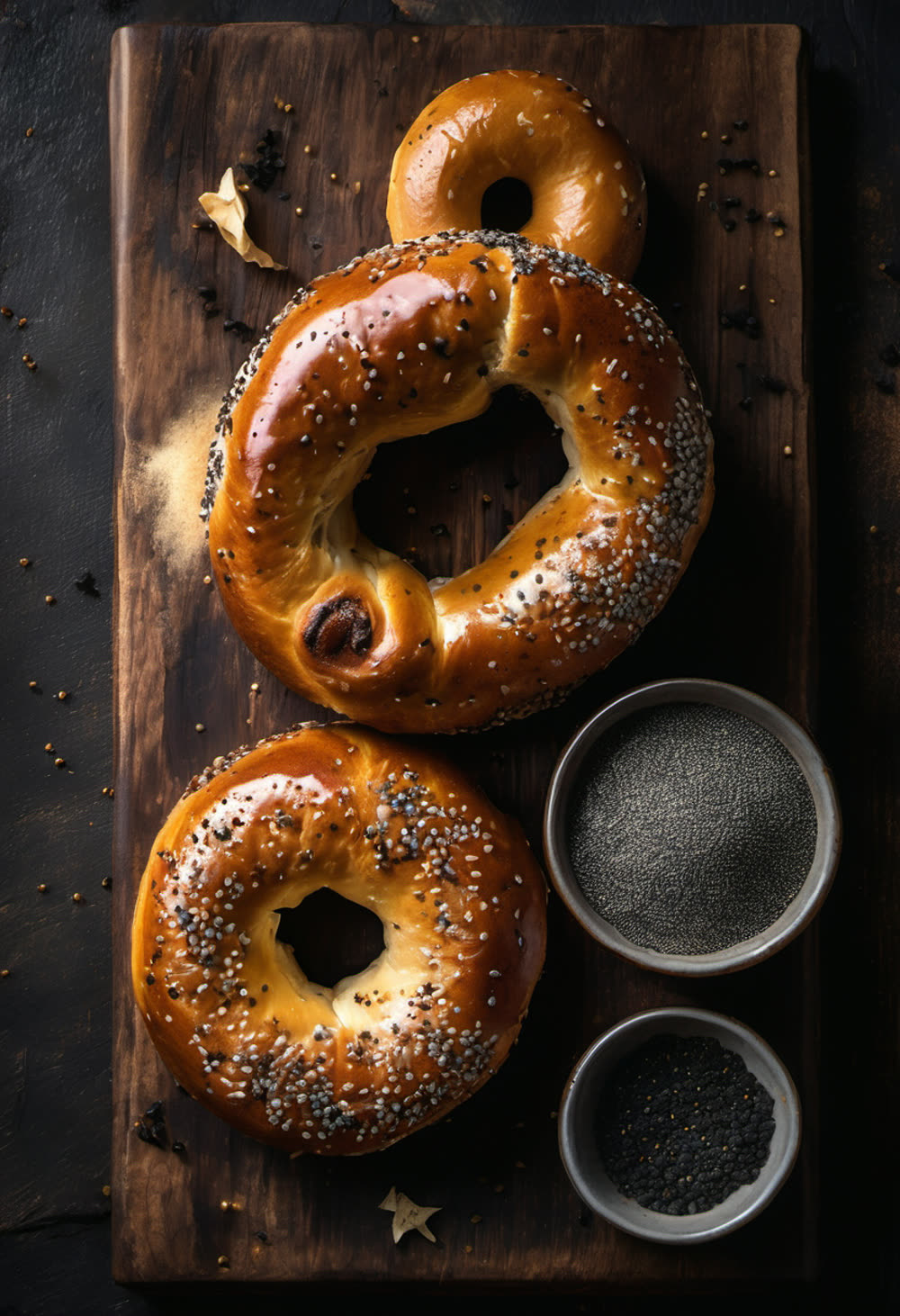
The oldest known written mention of the bagel comes from Kraków, not New York. The bread is boiled first and then baked, which gives it the shiny crust and chewy inside.
- Timeabout 2 h 30 min, including rising
- Makes8 bagels
- Typevegan
In 1610 the ordinances of Kraków's Jewish community mentioned bagels as a gift for women after childbirth. That is the earliest written record we have; it does not prove the bagel was invented there. Around 1900, Jewish immigrants from Poland brought bagels to New York, and New York made them famous around the world. Kraków's own street ring, the obwarzanek, is a different bread and even older: royal accounts mention it in 1394.
Ingredients
- 500 g strong bread flour
- 300 ml lukewarm water
- 7 g dried yeast
- 1 tbsp sugar or malt syrup
- 10 g salt
- To boil: 2 litres water with 1 tbsp honey or sugar
- To top: 3 tbsp poppy seeds (or sesame)
Method
- Mix the water, yeast and sugar, then add the flour and salt. Knead for 10 minutes into a firm, smooth dough. It should be stiffer than bread dough.
- Cover and leave to rise for about 1 hour, until clearly bigger.
- Divide into 8 pieces. Roll each into a ball, push your thumb through the middle and stretch it into a ring with a hole about 3 cm wide.
- Leave the rings on a floured tray for 20 minutes. Heat the oven to 220 °C and bring the water with honey to a gentle boil.
- Boil the bagels 2–3 at a time, 1 minute on each side. Lift them out with a slotted spoon and dip the tops straight into poppy seeds.
- Bake on baking paper for 18–22 minutes, until deep golden and shiny. Cool on a rack for at least 15 minutes before cutting.
Tip. Do not skip the boiling. It sets the crust before baking, and that is what makes a bagel a bagel instead of a bread roll with a hole.
Sources
- Bagel, English Wikipedia: 1610 Kraków Jewish community ordinances; boiled then baked; obwarzanek in royal accounts of 1394 (after M. Balinska, The Bagel, 2008)
- Bajgiel, Polish Wikipedia: gift for women after childbirth; brought to New York around 1900
Quantities are our own simple home version; the sources describe the dish, not these exact amounts. Picture: AI-generated illustration.
Cook next
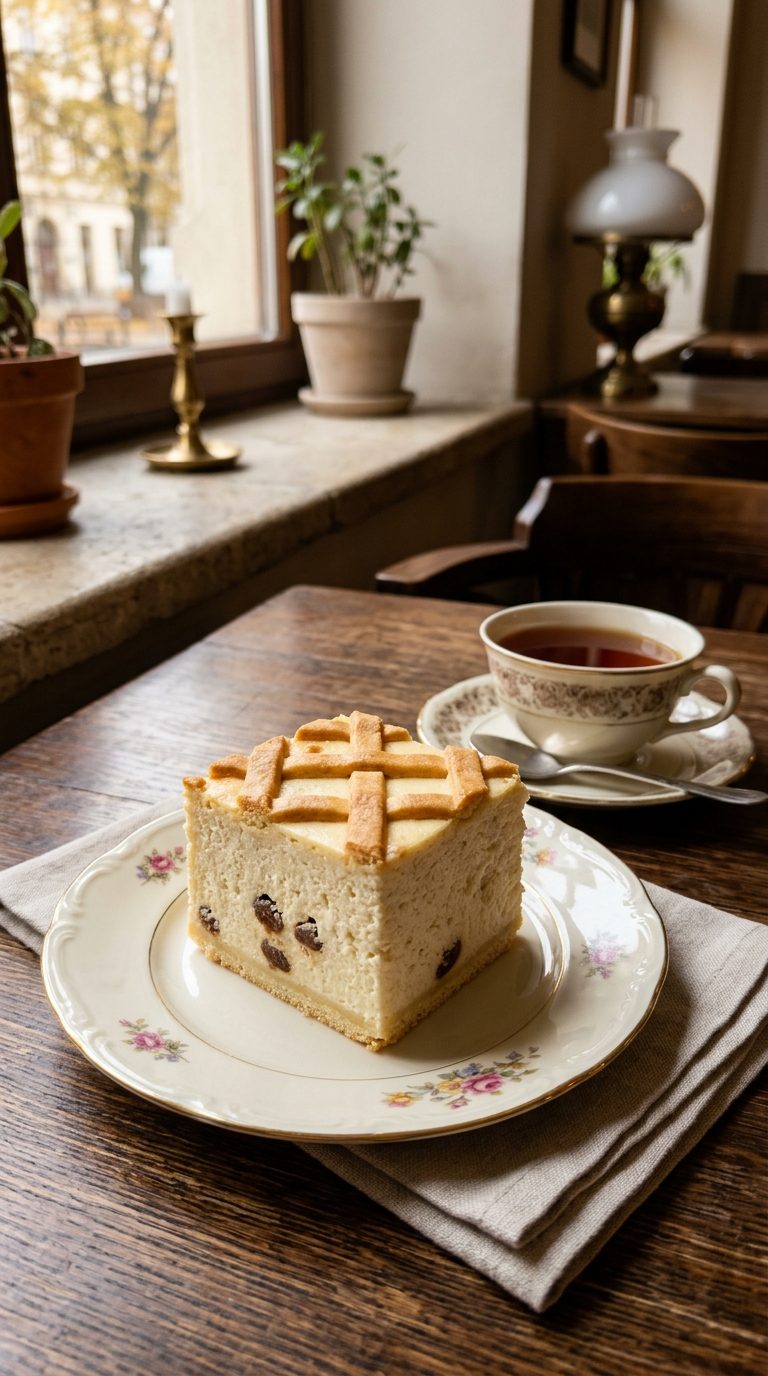 AI illustrationPolish bake · KrakówSernik Krakowski: Polish Cheesecake with a LatticeThis Polish cheesecake has no cream cheese. It is made with twaróg, a fresh curd cheese, and topped with a pastry lattice.
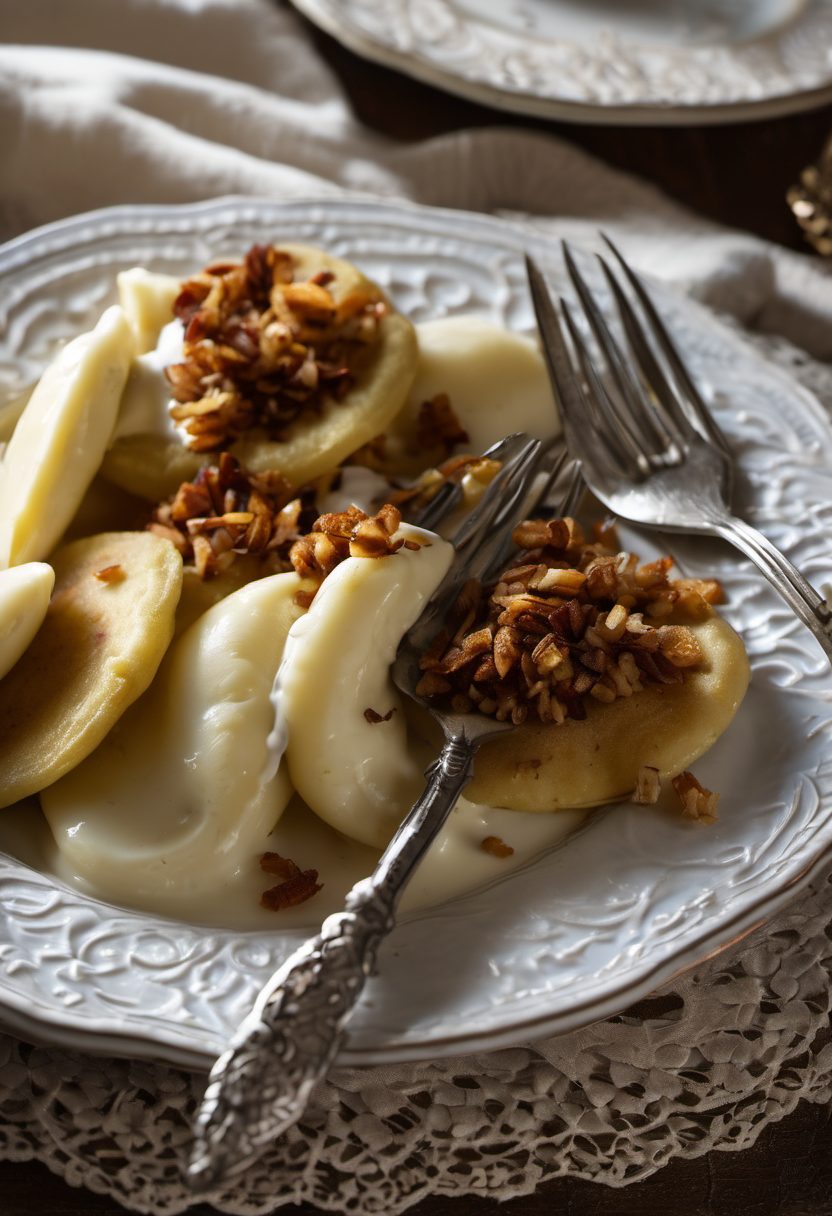 AI illustrationPolish recipe · KrakówPierogi Ruskie: Potato and Cheese DumplingsPierogi ruskie aren't Russian. The classic filling is just potato, white cheese and fried onion.